

What Are Neodymium Magnets? (Everything You Need to Know About NdFeB Magnets)
Neodymium magnets suppliers are involved in one of the fastest-growing markets today. The NdFeB magnets are known to be the highest performing permanent magnets commercially available.
These magnets offer unparalleled strength and resistance for their compact size. Sintered neodymium magnets are known to be low-cost and easily accessible in a wide selection of sizes, grades, and shapes.
Growth Rate of the NdFeB Magnets Market
Neodymium Magnet market size is expected to gain a market growth of a CAGR of 4.9% by 2026. This indicates a market growth of $2.6 billion to $3.6 billion in the forecast period of 2021 to 2026.
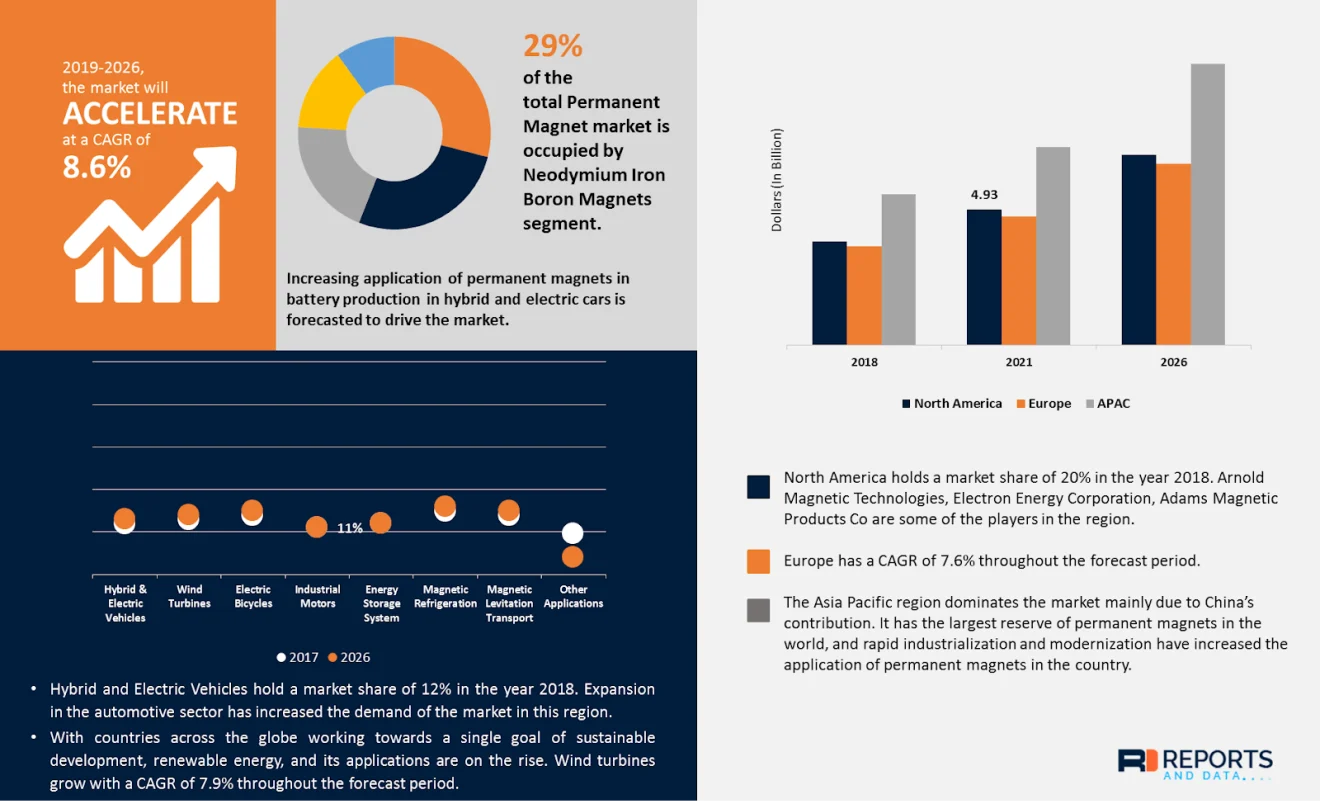
Moreover, 29% of the total Permanent Magnet market is covered by the NdFeB magnets sector. With those statistics, we get an idea of the growing demand directed towards Ndfeb magnets manufacturers.
What is Neodymium? (NdFeB Strength, Shape, and Common Applications)
Neodymium magnets are considered the strongest commercially available permanent magnets made from an alloy of neodymium, iron, and boron. It is also called NdFeB, neo, or NIB from these three constituent elements.
Magnet strength of Neodymium
NdFeB magnets are known for their incredible strength that allows lifting of objects multiple times their weight considering their very compact size.
Sintered Neodymium Magnets pull force is generally ten times stronger than ferrite magnets. The powerful magnets combine high coercivity with a high maximum energy product. This will produce a strong magnetic field that resists any sign of decay.
Manufacturing process determines NdFeB magnetic strength.
NdFeB magnets manufacturers mainly use two ways to create these magnets: sintering and bonding. These manufacturing processes will determine magnet power and strength.
Sintering uses high pressure to form raw magnetic materials into blocks that will then be heated. After intricate heating, these magnets will then be shaped and coated for additional corrosion protection.
Bonding creates magnets by combining raw materials and binding with epoxy. These will then be pressed into a die cavity and heat-cured.
Sintering is the most common manufacturing method used because it doubles the strength of the bond. However, bonding is more affordable and versatile, allowing magnets to be created in various shapes and sizes. Sintered magnets are confined to simpler forms because they can be quite brittle.
Magnet Grades of Neodymium Magnets
Sintered Neodymium magnets are ranked according to their maximum energy product. NdFeB magnets produce the highest level of stored energy among all permanent magnet materials.
This is shown in a figure ranging from N32 to N55, where N refers to neodymium, and additional suffixes indicate coercivity. Figures will be in megagauss-oersteds or MGOe, which will indicate the stored energy in a magnet.
NdFeB magnets will get more brittle the higher the magnetic grade.
Common NdFeb Magnet grades:
- N35: This is one of the weakest among NdFeB Magnets, but it is also inexpensive, making N35 NdFeB magnets a budgetfriendly option in volume production where size and weight are not critical factors.
- N42 and N45: These magnet grades are ideal for use in machines used for DIY parts and operations. They are powerful and versatile enough for many common applications. N42 and N45 NdFeB magnets can be used in packaging and manufacturing as a mount, holder, stand, magnet rotor, Halbach array, and linear coupler.
- N48 and N50: Since there is a premium on the highest magnet grades, these two NdFeB magnet grades are the most commonly used in production.
- N52: For many years, N52 was recognized as the strongest magnetic field, making it the most expensive and most brittle out of all Neodymium magnets. N52 magnets are almost 50% stronger than N35 magnets. N52 is used in volume production and holdings. N55 magnets have yet to gain the same level of popularity as N52.
- N55: N55 magnets are a recent invention. It is almost 5 to 6 percent as strong as N52 magnets and is currently the strongest magnets available for commercial use. It is ideal for fine and delicate production and engineering work where space is limited, such as magma engineering, magnetic sensors and switches, and holding applications.
Size and Shapes of Neodymium Magnets
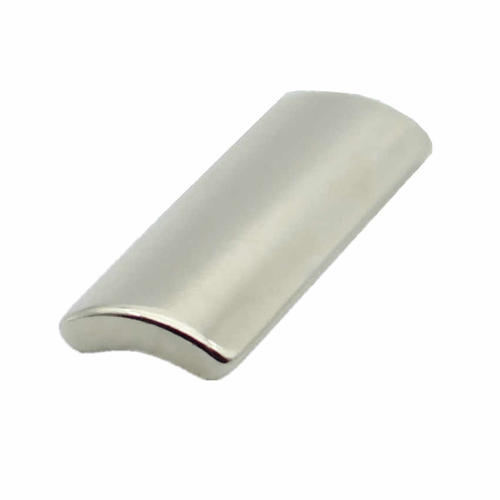
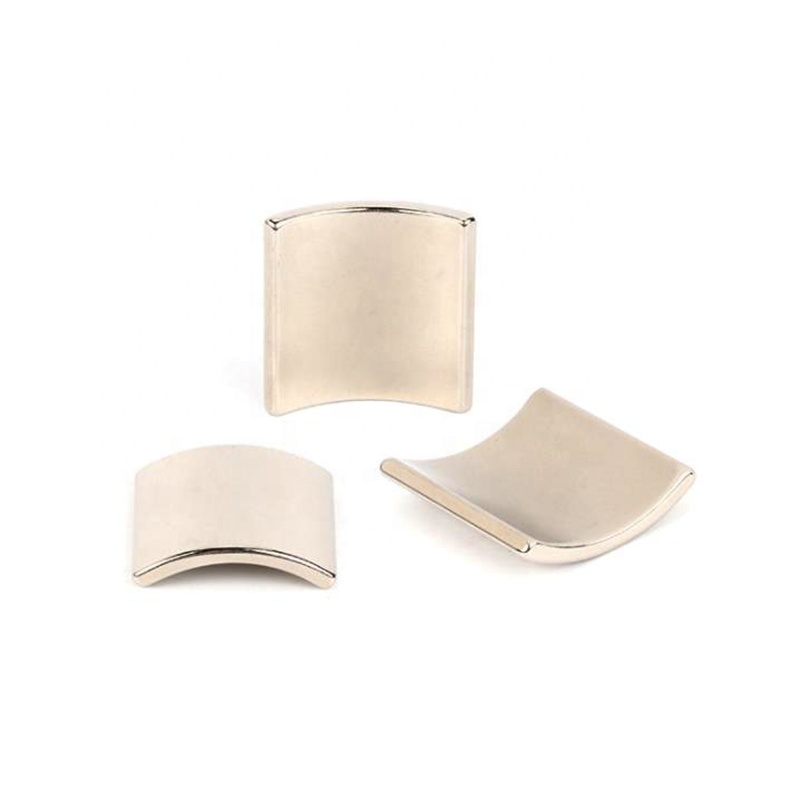
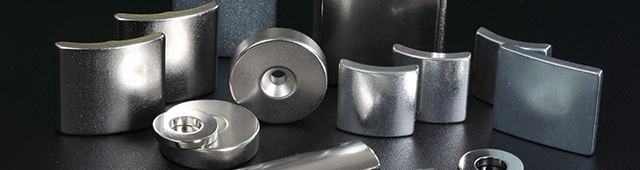
Neodymium magnets come in versatile designs, shapes, and sizes due to the meticulous attention of NdFeB magnets manufacturers.
The most common shapes distributed by Neodymium magnets suppliers are:
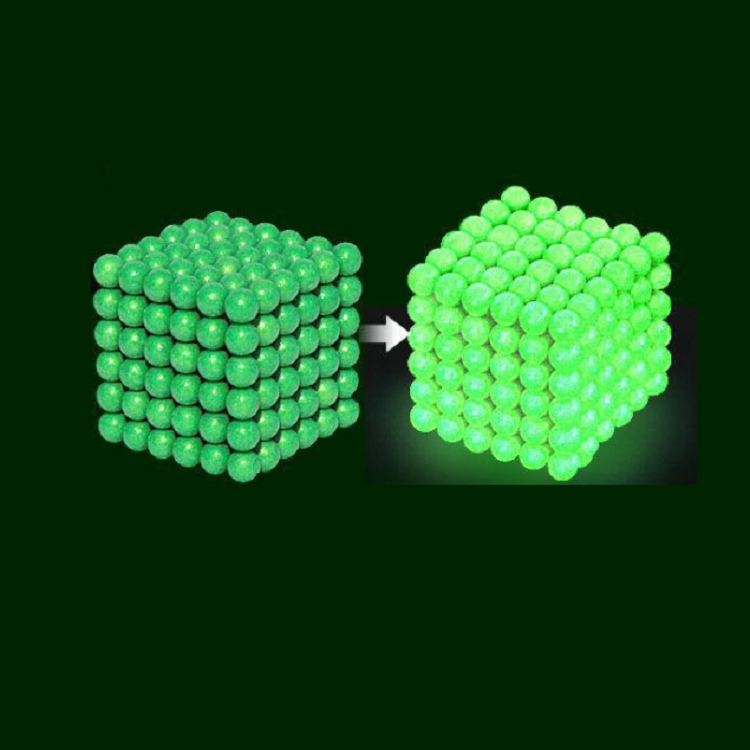
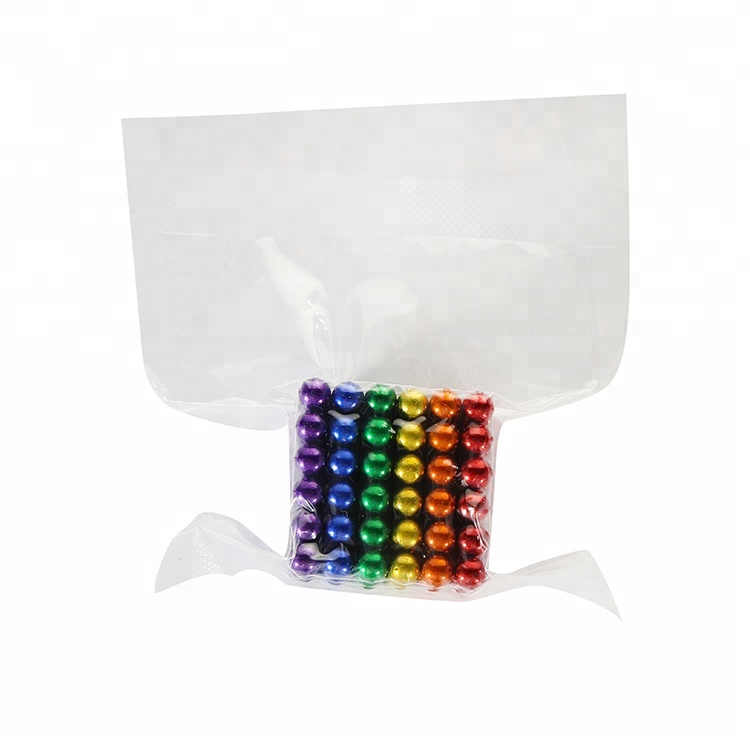
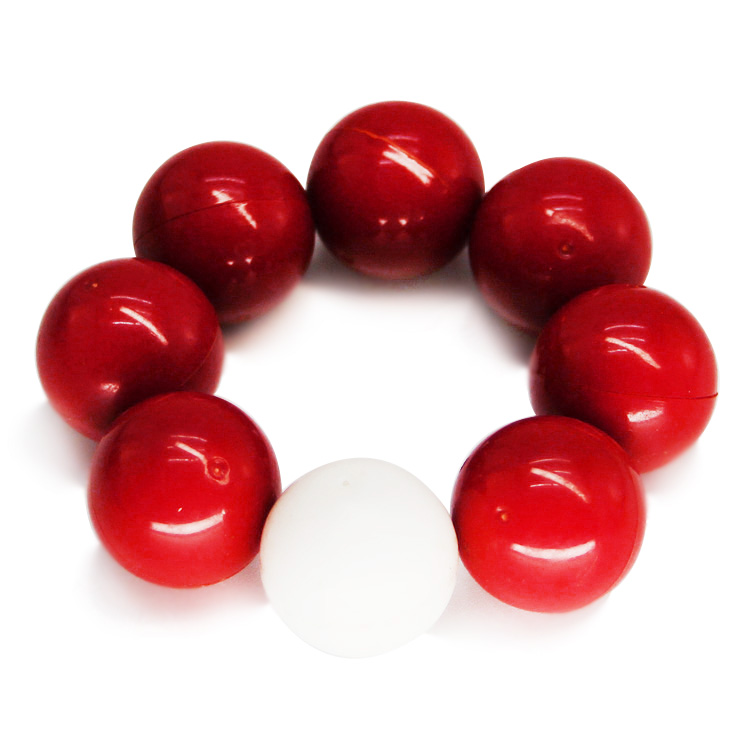
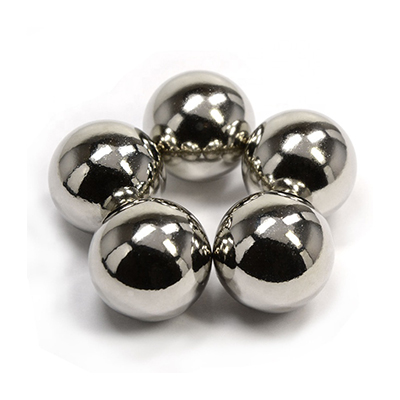
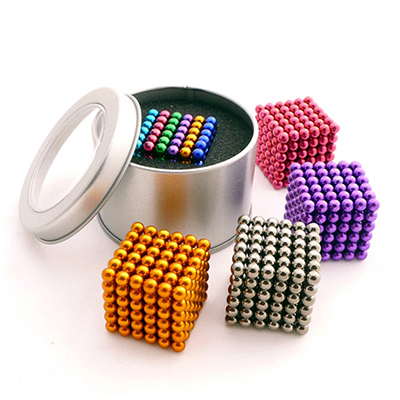
- Balls or Spheres: Neodymium balls are one of the most commonly used in manufacturing. They can be used for polishing, shaping, solidifying, and plating.
- Rings: Neodymium ring magnets are used in magnetic applications that need a central hole.
- Discs and Cylinders: Neodymium discs are round magnets that are stuck into drilled holes. Discs are versatile enough to be used in industrial, commercial, technical, and consumer applications.
- Rods and Bars: These have an elongated design that is easy to grip. Almost all models will have opposing magnetic fields on each pole. They are commonly used in home furnishings, jewelry, at home, and in the office.
- Cubes and Blocks: These are used in applications requiring straightended bars.
- Pots: Neodymium pot magnets have a steel shell with a neodymium magnet embedded into one side. It is commonly used as a magnet base or for outdoor mounting.

Due to the sheer strength of Neodymium magnets, very compact sizes are sufficient for many applications. Commercial use and large-scale industrial, mining, and machinery applications can opt for high-quality Neodymium magnets in China.
When measuring NdFeB sizes, consider thickness, dimensions (diameter, width, length), and thread size.
Properties of Neodymium Magnets VS other Magnets
Compared to other permanent magnets, Neodymium magnets have:
- A stronger (remanence) and denser (maximum energy product or saturation magnetization) magnetic field
- Greater resistance to demagnetization (coercivity)
- Lower resistance to high temperatures that will cause demagnetization
Common Applications of Neodymium Magnets
The powerful neodymium magnet is used for many versatile applications due to its high-performance properties and strength. It can handle demanding tasks in heavy duty industrial and commercial applications, including:
- Fixing, closure, and lifting machinery
- Clamping, positioning, attracting
- Fixing and fastening of components (ideal for neodymium ring magnets or discs)
Other important industries that use Neodymium magnets include:
- electrical equipment such as hard disk drives and audio equipment (microphones, speakers, headphones)
- Medical field (MRI scanners, magnetic therapy, dentures, surgical equipment, etc.)
- Research and development
- Aerospace
- Military and defense
- Energy (oil and power)
- Industrial automation
Many industries rely on the production and services of the best manufacturers and suppliers of Neodymium magnets in China.
Neodymium Magnets in China
China continues to be the largest producer and exporter of the NdFeB magnet industry worldwide. The Chinese market covers more than 95% of rare-earth metals while covering 76% of the world’s rare-earth magnets.
Conclusion
Neodymium magnets are a fast-growing market worldwide due to their reliable properties, unparalleled strength, and versatility in multiple applications.
NdFeB magnets are a valuable component in industries including commercial, industrial, medical, power, and research and development.
China continues to be the top producer and supplier of rare-earth permanent magnets, including Neodymium. Because of their close attention to research and development, DailyMag has become the leading manufacturer and supplier of Neodymium Magnets in China.